The first time I heard about antibiotic resistance I was a semi-unhygenic sixth grader who thought she had just found an excuse to stop sanitizing her hands. I mean, why sanitize if the germs were only learning to get stronger? Of course, a lot has changed in the past nine years, including my understanding of antibiotic resistance, superbugs, and their impact. Within this blog post, I will explain how my sixth grade logic both fundamentally aligns with and dangerously oversimplifies what is now known about microbial resistance.
First I will introduce the concept of a superbug, as I find these to be a very straightforward embodiment of microbial resistance. A superbug is a microbe or germ that has become resistant to the specific type of drug that once killed it. In other words, a superbug can be understood to have adapted to a particular drug, making it ineffective and too weak to kill that microbe. It is also understood that superbugs are more common in places that are actively attempting to kill off germs more frequently, as the larger presence of the antimicrobials allow the particular microbes to learn and adapt against them. This idea, that more attempts to kill the germs actually inspire their adaptation into something stronger, was the foundation of my hygienic rebellion when first learning about germ resistance.
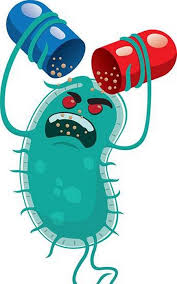
But, as my understanding of microbiology has developed with research on superbugs and resistance, it becomes clear that the angle at which I was understanding resistance was one of a limited and mistargeted nature. The CDC, rather than focusing on resistance to hand sanitizers and soaps, looks to the use of antibiotics as the roots of superbugs. Antibiotic resistance occurs when these antimicrobials kill almost all the intended microbes, while leaving behind the select few that were resistant to the drug. These microbes will then replicate, producing more microbes that like its parent, resistant to the particular antibiotic. The resistant microbes left are those that adapt into the superbugs we fear we will not be able to kill or control.
Antibiotic resistance is not limited to the doctor’s office, as it is also cultivated through US farming practices and procedures. Food producers feed animals antibiotics in order to make them more profitable on the market. So when you see a fatter piece of chicken meat or an extra-shiny apple in the grocery store, you are also seeing the product of antibiotic preservation and enhancement. By consuming these products, you are also consuming the antibiotics that went into their production, consequently introducing the microbes to another antimicrobial against which they could become resistant.
Directly contradicting my original understanding of microbial resistance, the CDC strongly emphasizes the importance of sanitizing hands and food products in order to prevent the spread of superbugs and antibiotic resistance. In other words, misunderstanding resistance like I once did could result in the exact opposite effect that I had intended: the ability of these resistant microbes to proliferate and spread. The impact on the human population can be seen in the form of incurable infections.
As this research has explained, the expanding use of antimicrobials are producing an increase in microbes that are resistant to them. Hopefully this blog post has made clear what was not to me back in the sixth grade: that sanitation practices are not the root of antibiotic and superbug proliferation, but rather effective ways to mediate these adverse effects. Additionally, I hope this blog could communicate the importance of antibiotic consciousness, seeing as increasing one’s exposure to an antibiotic puts them at risk for developing resistance to that antibiotic.

 Kate's MCRO Journey